
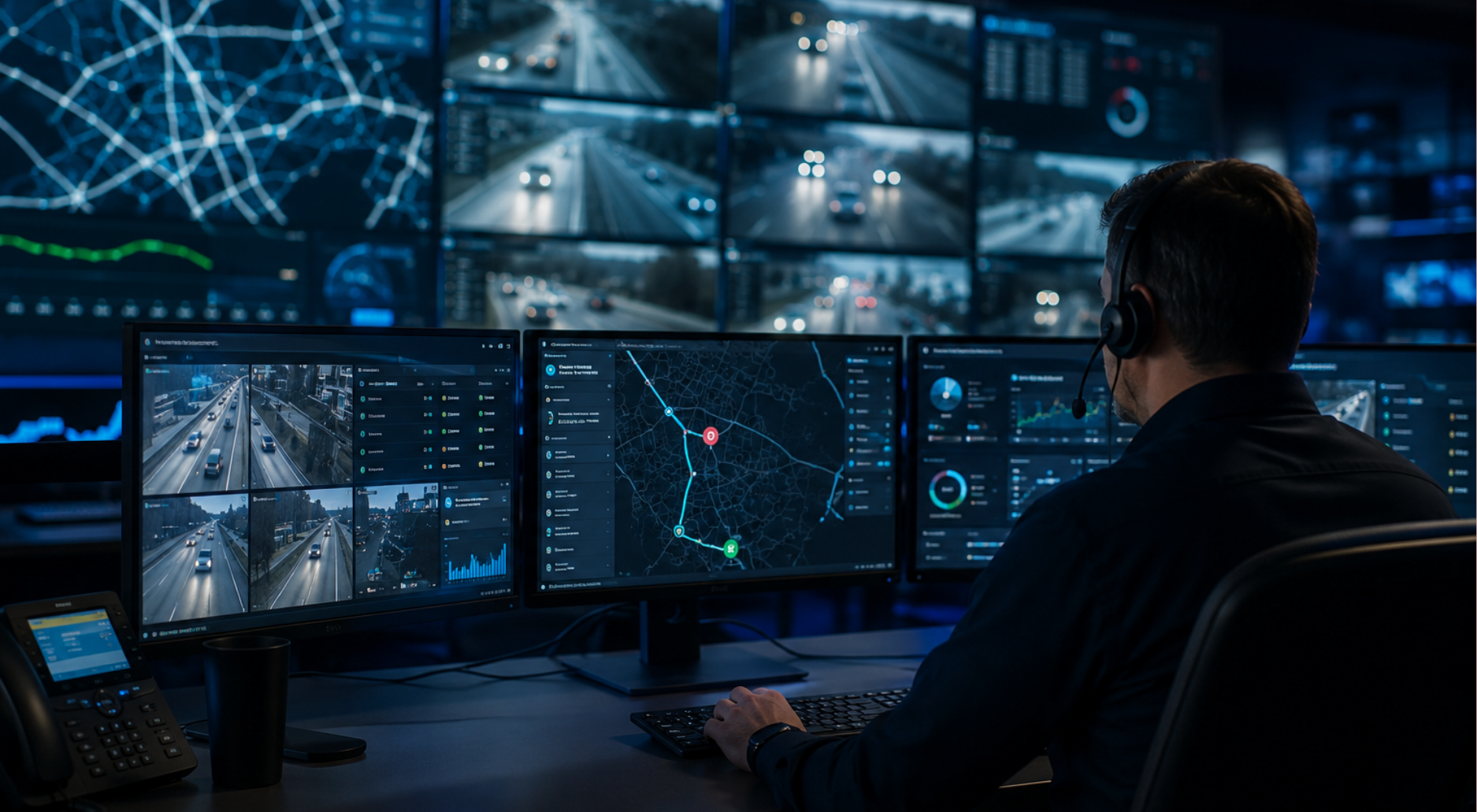
Imagine a fleet vehicle travelling after midnight. The driver looks away from the road for longer than expected, the vehicle slows sharply and an in-cab monitoring system flags the behaviour. Within moments, a high-risk fleet alert reaches the control room.
The alert itself is not the response. It is the starting point.
Technology can identify possible danger quickly, but it still takes context, judgement and a clear escalation process to decide what should happen next. Instead of leaving a manager to discover the event hours later, trained controllers can assess it while the vehicle is still moving.
The First Few Seconds: The Alert Arrives
A high-risk alert may be linked to distracted driving, speeding, harsh braking, fatigue, seatbelt non-compliance or interference with an in-vehicle camera. The controller may also receive supporting information such as the vehicle, driver, time and location.
Not every notification carries the same urgency. A short movement detected by a camera may simply need review. Repeated fatigue indicators, dangerous speeding or erratic driving could require immediate intervention.
When every alert is treated as an emergency, genuine risk can become buried in noise. The first job is to determine what deserves attention now.
Next Comes Human Verification
A controller reviews the available information, which may include video footage, location data and the events recorded immediately before and after the alert.
The purpose is to answer three practical questions. Is the alert genuine? How serious is the situation? Does someone need to act immediately?
Technology is highly effective at noticing patterns, but it does not always understand the full scene. Sudden braking could indicate careless driving, or it could be a sensible reaction to an unexpected hazard. Human review helps prevent assumptions from becoming unnecessary escalations.
The Response Is Matched to the Risk
Once the event has been verified, the next action depends on its severity and the client’s agreed response process.
A controller may contact the driver, notify the fleet manager, request that the vehicle stop at a safe location or escalate the matter to emergency or security support where appropriate. The objective is to reduce immediate exposure before the situation becomes harder to manage.
A timely intervention could interrupt mobile phone use, confirm whether a tired driver is fit to continue, or reveal a breakdown, route problem or medical concern.
The response should also suit the operation. A logistics fleet, staff transport service and executive mobility provider may face different consequences from the same type of alert. Effective fleet risk management depends on the right reaction for that vehicle, driver and journey.
The Incident Does Not End When the Call Ends
After the immediate risk has been addressed, the alert and action taken can be documented for reporting and follow-up.
One incident may only require a conversation. A pattern across several trips could point to a training need, scheduling pressure, route conditions or a driver who requires closer support. Verified events can help businesses make better decisions about coaching, internal policies and shift planning.
Why 24/7 Coverage Matters
Fleet risk does not keep office hours. Vehicles may operate early in the morning, late at night, over weekends or across long-distance routes. Without continuous oversight, a serious alert may remain unseen until the opportunity to intervene has passed.
HSP Mobility pairs AI-enabled fleet monitoring with trained human supervision through its 24/7 Control Room. This gives businesses a more considered way to respond to high-risk events, using technology to detect possible danger and people to decide what should happen next.
For organisations responsible for drivers, passengers and valuable vehicles, the most important question is not whether a system can generate an alert. It is what happens in the minutes after that alert appears.
To learn how HSP Mobility can support safer, more responsive fleet operations, contact the team on 010 055 7257 or email info@hspmobility.co.za.